The Design Gap in “100% Recyclable” Packaging and the Case for System-Aligned Circularity
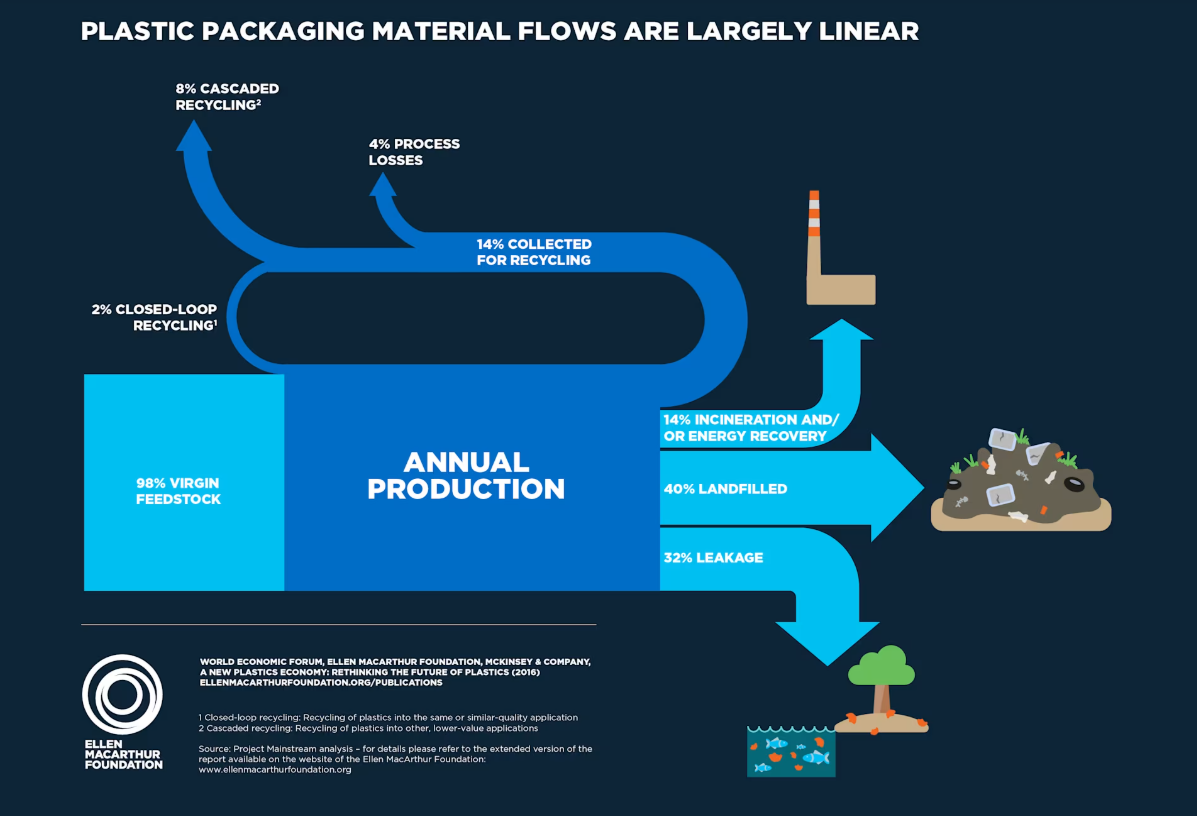
(Source Credits: Ellen Macarthur Foundation)
The packaging industry is at a critical crossroads. For decades, the "100% recyclable" label has served as the primary benchmark for corporate sustainability. However, global data confirms that this label is often a technicality rather than a functional solution. According to the OECD, only 9% of plastic waste is actually recycled globally. The remaining 91% ends up in landfills, incinerators, or leaking into our oceans. This staggering gap between theoretical recyclability and real-world recovery highlights a fundamental flaw: circularity is often lost at the design stage.
This gap suggests that the limitation is not solely in waste management systems or consumer behavior, but in how materials are designed and introduced into the system. Much like the health burden of plastics is largely determined at the production stage, the recoverability of plastic is often “baked in” at the design stage. Once a packaging format is created using complex, multi-material structures, its likelihood of being effectively recovered is significantly reduced, regardless of downstream interventions.
Quantifying the System Gap: Recyclable vs. Recovered
To understand the scale of this issue, it is important to distinguish between recyclability as a property and recovery as an outcome. While a large share of plastic packaging is technically classified as recyclable, actual recovery rates remain disproportionately low.
Global plastic production exceeds 400 million tonnes annually, yet only a fraction is cycled back into the economy
A significant portion of plastic packaging is used once and not recovered
Flexible and multi-layer plastics, which account for a growing share of packaging, have near-zero recycling rates in many markets
These numbers indicate that a majority of materials labelled as recyclable are not actually re-entering the production cycle. Recycling systems are optimized for homogeneous, high-volume materials such as PET and HDPE, and struggle to process complex, multi-material formats at scale.
Analysis by Systemiq shows that a substantial share of plastic packaging is not economically recyclable, meaning that even when technically feasible, recovery does not occur due to cost constraints.
The Case for System-Aligned Circularity
Recycling remains our most effective tool to decouple plastic production from fossil fuels. However, it requires a functional environment to succeed. A recycling system is only as efficient as the quality of the inputs it receives. True circularity requires System-Aligned Design. This means moving away from packaging that can be recycled in a laboratory and moving toward packaging that will be recovered in the real world. We must design for the infrastructure that exists today, rather than an idealized future.
Bridging the Gap with Plastics For Change
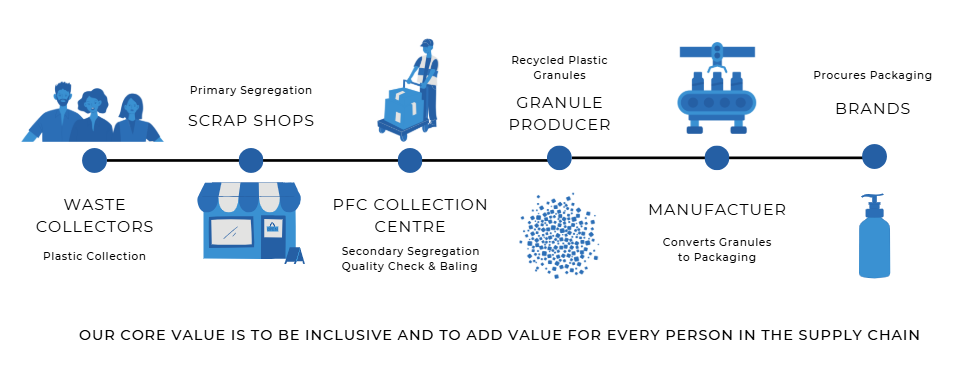
(Source Credits: Plastics For Change)
Our verified and certified (WFTO, Social+ OBP, B Corp) supply chain bridges the gap between design and recovery. We treat the plastic crisis as both a material challenge and a human opportunity.
We focus on recovering plastics (even the multilayered ones), ensuring that the waste collected has a guaranteed path back into the global economy.
Our tech-based tracking provides brands with a clear "chain of custody," ensuring that recycled content is both high-quality and ethically sourced.
We formalize the informal waste sector by providing waste collectors with fair wages, healthcare, and safe working conditions. This creates a stable, resilient foundation for the circular economy.
The era of using "recyclable" as a marketing term is ending. The new benchmark is Recoverability. For brands, this means asking a critical question before a product reaches the shelf: Is this material designed to survive the journey back into the system?
Take Action Align your packaging with reality. Partner with Plastics For Change to source high-quality, ethically recovered materials that create value for your business and the planet.
Explore our impact and partner with us at Plastics For Change