
Why Ethical Ocean-Bound Plastic Is Moving from Premium Niche to Economic Imperative
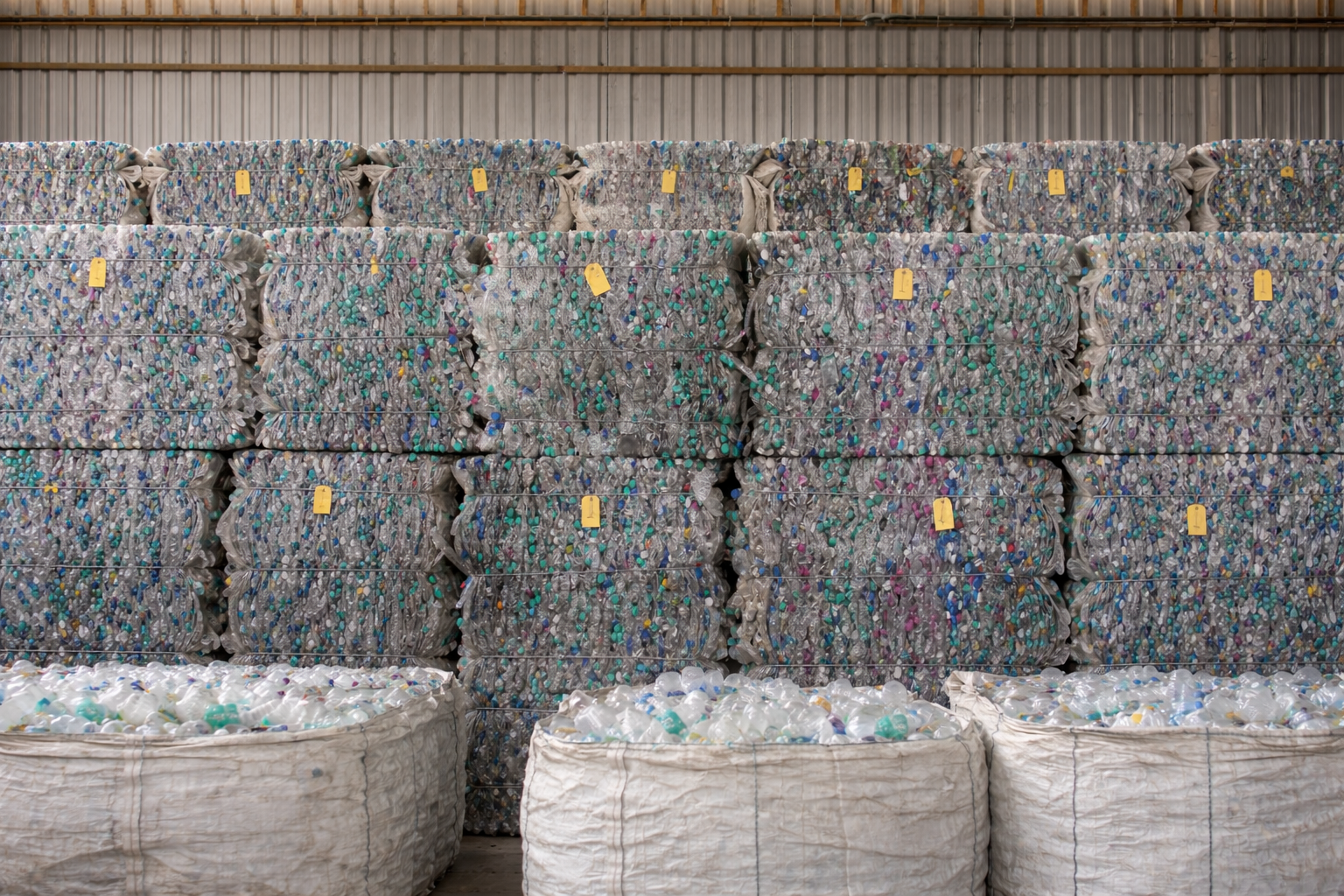
(Source Credits: Plastics For Change)
For decades, packaging economics relied on one assumption: virgin resin was cheaper, cleaner, and easier to scale than recycled material. Incorporating recycled plastic carried moral value, but the business case depended entirely on voluntary sustainability goals or public relations. That baseline is fracturing.
Rising energy costs, supply chain volatility, strict regulations, and advanced tracking are rapidly shifting the math. We are closing in on an inversion point, a moment where ethically sourced, recycled Ocean-Bound Plastic (OBP) competes not just as the responsible choice, but as the lower-cost, lower-risk strategic asset.
Why Virgin Resin Won For Long (and Why It’s Losing)
Historically, the linear “take-make-waste” model possessed three structural advantages:
Industrial Scale: Petrochemical systems built over generations manufactured uniform polymer streams at immense volumes.
Fossil Subsidization: Oil and natural gas provided an artificially cheap raw material base, accounting for roughly 60% of virgin production costs.
Predictability: Virgin resin delivered frictionless, uniform quality.
Conversely, ocean-bound plastic collection has been fragmented and informal. The overhead of sorting, cleaning, and verifying these streams meant that high-quality recycled polymers traditionally traded at a 20% to 40% premium over virgin equivalents. The waste itself was cheap, but the system required to process and verify it was expensive.
Energy Volatility is De-Risking Recycled Plastic
Energy market volatility is no longer cyclical; it is structural. This volatility exposes virgin and recycled plastics to market shocks in entirely different ways:
Virgin Plastic: Tied directly to oil and gas markets. Fossil feedstocks dictate 60% of production costs. When geopolitical shocks hit energy markets, virgin resin absorbs that inflation immediately, forcing an automatic price hike for brands.
Recycled Plastic: Completely decoupled from fossil feedstocks. Its cost profile is driven by collection logistics, sorting, and processing.
While recycled plastic is influenced by general transport costs, it is shielded from petrochemical price spikes. As oil prices fluctuate, localized ocean-bound plastic supply chains function as a natural macroeconomic hedge.
The Repricing Scenario: Factoring in Externalities
Today, virgin resin trades at roughly $950 to $1,100 per ton, while high-quality recycled OBP commands $1,200 to $1,400 per ton. However, when you factor in imminent market pressures like fossil fuel spikes, carbon pricing, and plastic taxes, the numbers flip:
Virgin Resin: High exposure to petrochemical shocks can automatically drive costs up to an estimated $1,840 per ton.
Recycled OBP: Shielded from direct feedstock shocks, costs rise much more modestly to around $1,430 per ton.
At this inflection point, recycled content transitions from an added sustainability expense to a direct cost-saving mechanism, offering brands an approximate 20% to 25% cost advantage over virgin resin.
Furthermore, policies are rapidly forcing the market to internalize the environmental costs of plastic leakage. Globally, governments are moving toward strict legal mandates such as EPR where sourcing recycled material is no longer just a procurement preference; it is a market access issue. Brands unable to verify recycled content risk being fined, penalized by carbon taxes, or locked out of major retail markets entirely.
Compressing the “Trust Premium” Through Traceability
Historically, a large portion of the recycled plastic premium wasn’t a production cost, it was a trust premium. Procurement teams paid more to manage the risks of unverified origins, fragmented supply chains, and greenwashing.
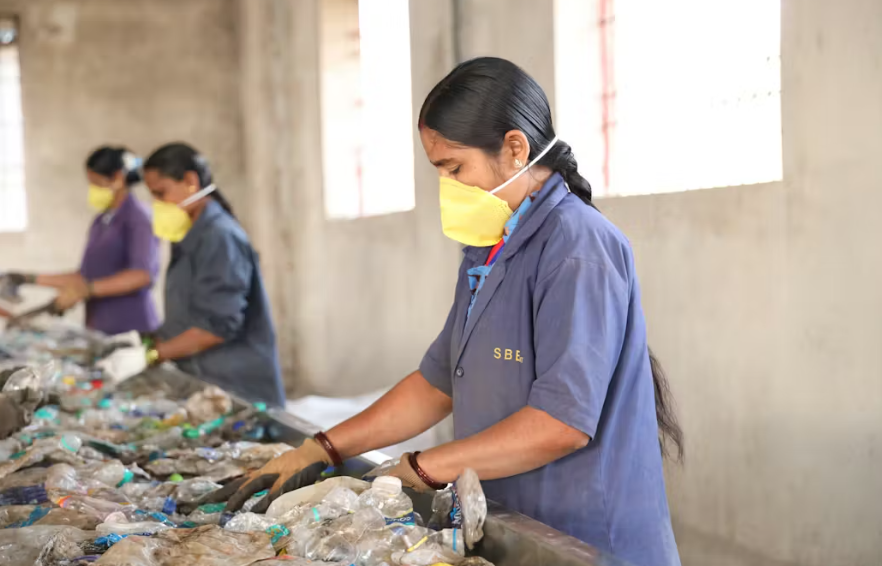
(Source Credits: Plastics For Change)
At Plastics For Change, we eliminate this uncertainty through a fully verified, traceable supply chain that provides three distinct advantages:
Verified Material Identity: Every metric ton of OBP we recover is tracked from coastal collection points through processing, ensuring absolute clarity on origin.
Rigorous Certification: Backed by global standards (WFTO, Social+ OBP, and B Corp), we remove the compliance risks that plague unmanaged waste streams.
Social Dignity: By formalizing the informal waste sector, we ensure collectors receive fair wages and healthcare, securing a clean supply chain and a verified social impact narrative.
By embedding data transparency directly into our operations, we compress the cost of uncertainty, allowing brands to confidently scale their circular packaging commitments.
The Bottom Line: Adapt to the New Math
The business case for recycling has evolved past purely ethical arguments. Driven by energy volatility, strict global regulation, and advanced supply chain verification, the underlying economics of materials have fundamentally shifted.
The question is no longer whether your brand can afford to transition away from virgin plastic. The question is how quickly your supply chain can adapt before virgin resin becomes a financial and regulatory liability.
Position your brand ahead of the regulatory curve. Partner with Plastics For Change to secure fully traceable, ethically recovered Ocean-Bound Plastic that protects both your bottom line and the planet.